AI Product Workbench: My Own AI Engineering Harness
AI Harness Engineering
Agentic Workflows
UI/UX Prototyping
LLM Reliability
Evals
Developer Tooling
TypeScript / React
Product Vision
AI Harness Engineering
Agentic Workflows
UI/UX Prototyping
LLM Reliability
Evals
Developer Tooling
TypeScript / React
Product Vision
CUSTOMER

02/26 - 10/26
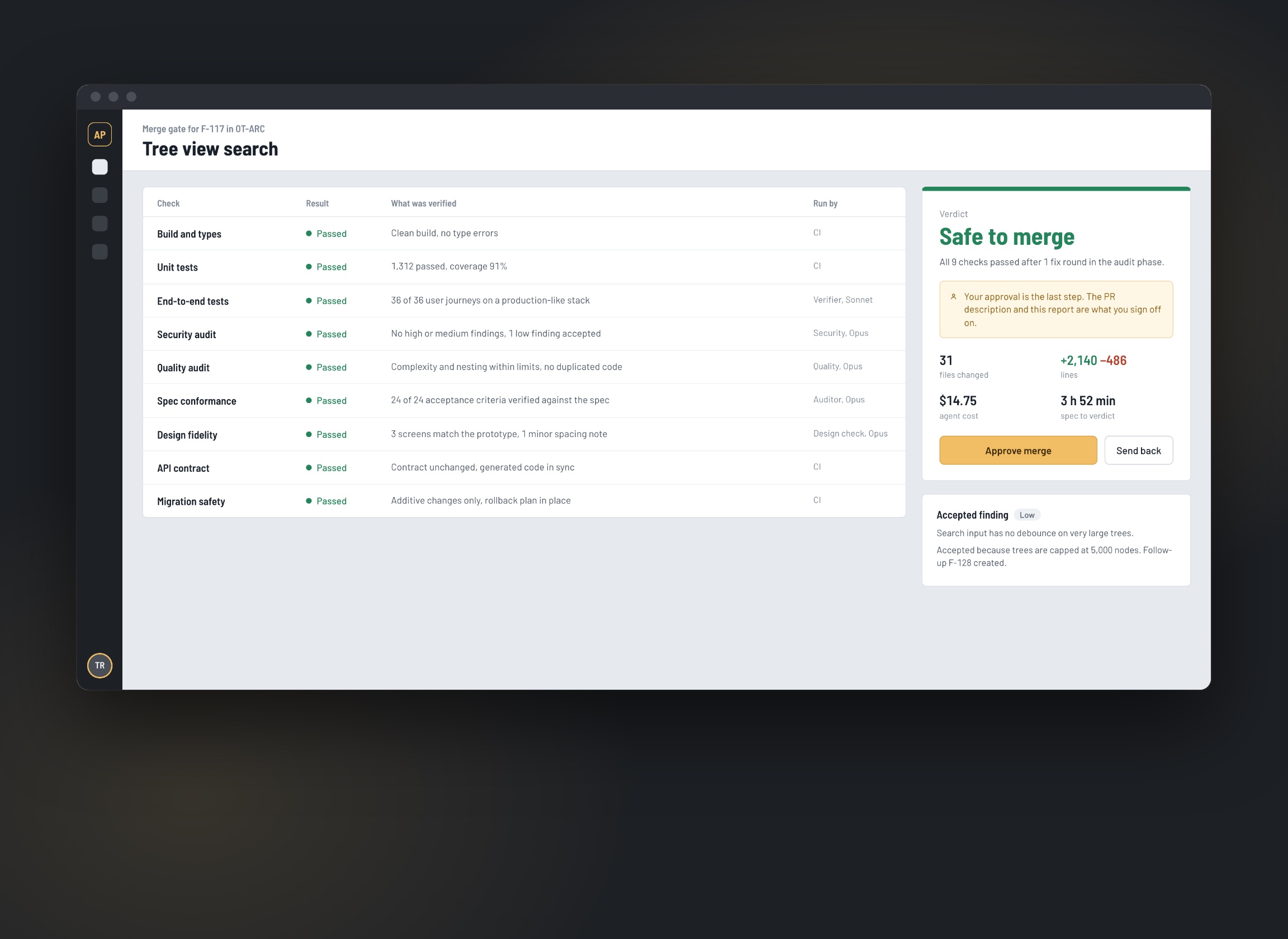
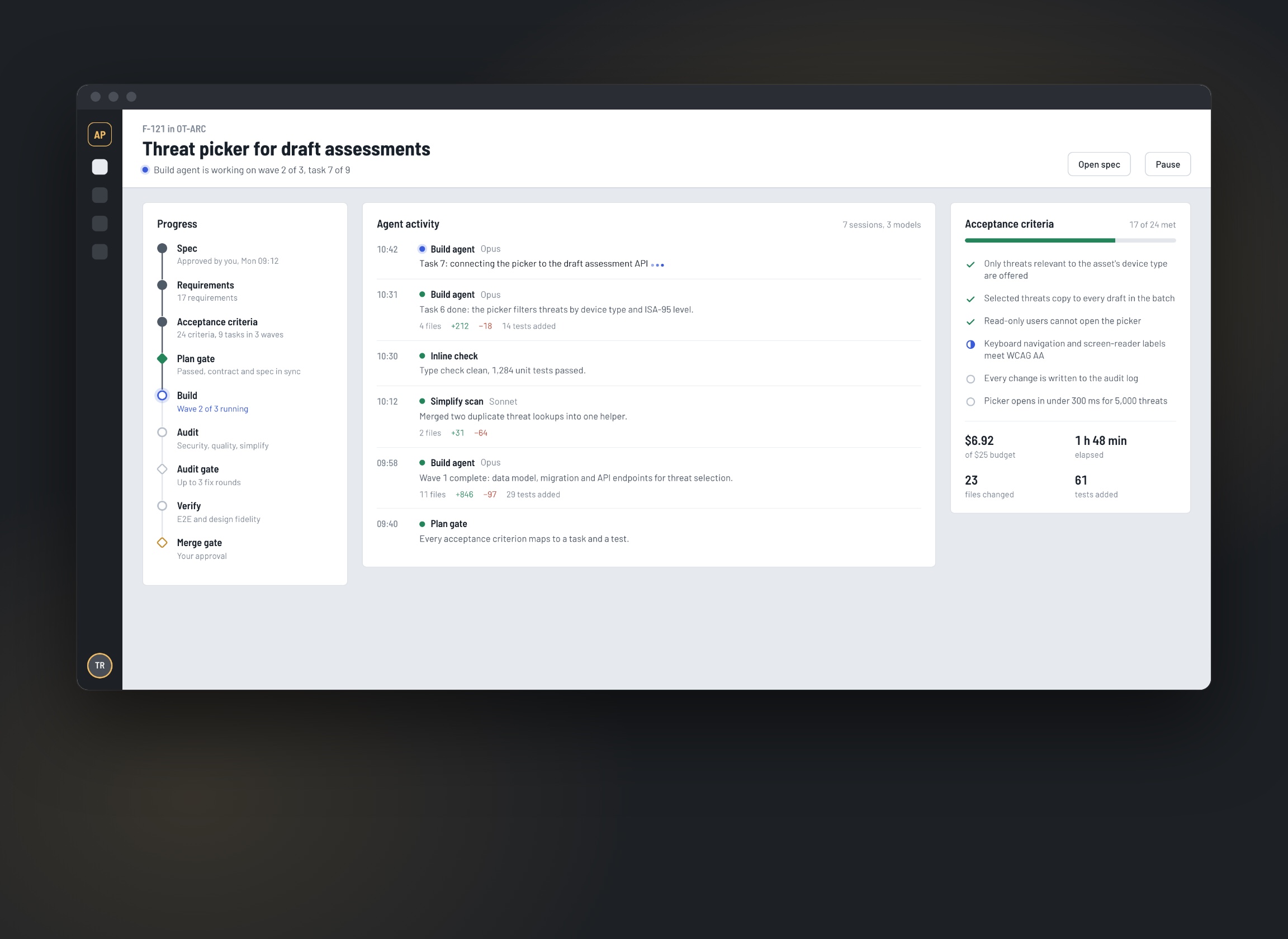
The AI Product Workbench is the harness I designed and built to turn a feature specification into reviewed, merged code. Built on Claude, it orchestrates AI agents through every phase of product engineering, from requirements to security audits and design checks, and it is how I deliver all my current projects.
The developer shouldn't be the integration layer
why I built it
The developer shouldn't be the integration layer
why I built it
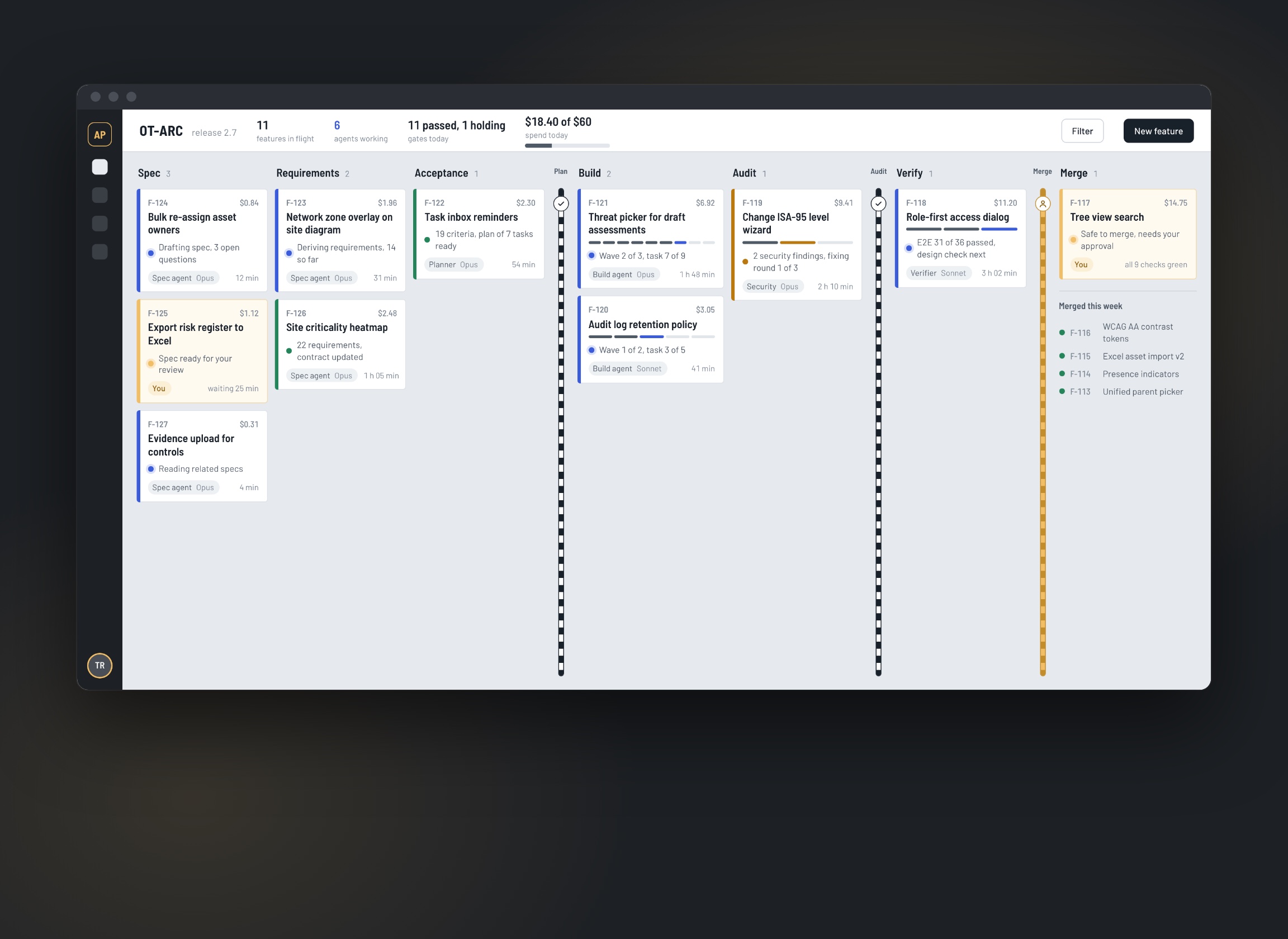
Coding agents are fast, but someone still has to carry context from spec to code to review. The workbench moves every feature through a fixed sequence of phases (spec, requirements, acceptance criteria, build, audit, verification, merge) and brings humans in only at defined gates.
Design first, then verify against it
prototype-driven design fidelity
Design first, then verify against it
prototype-driven design fidelity
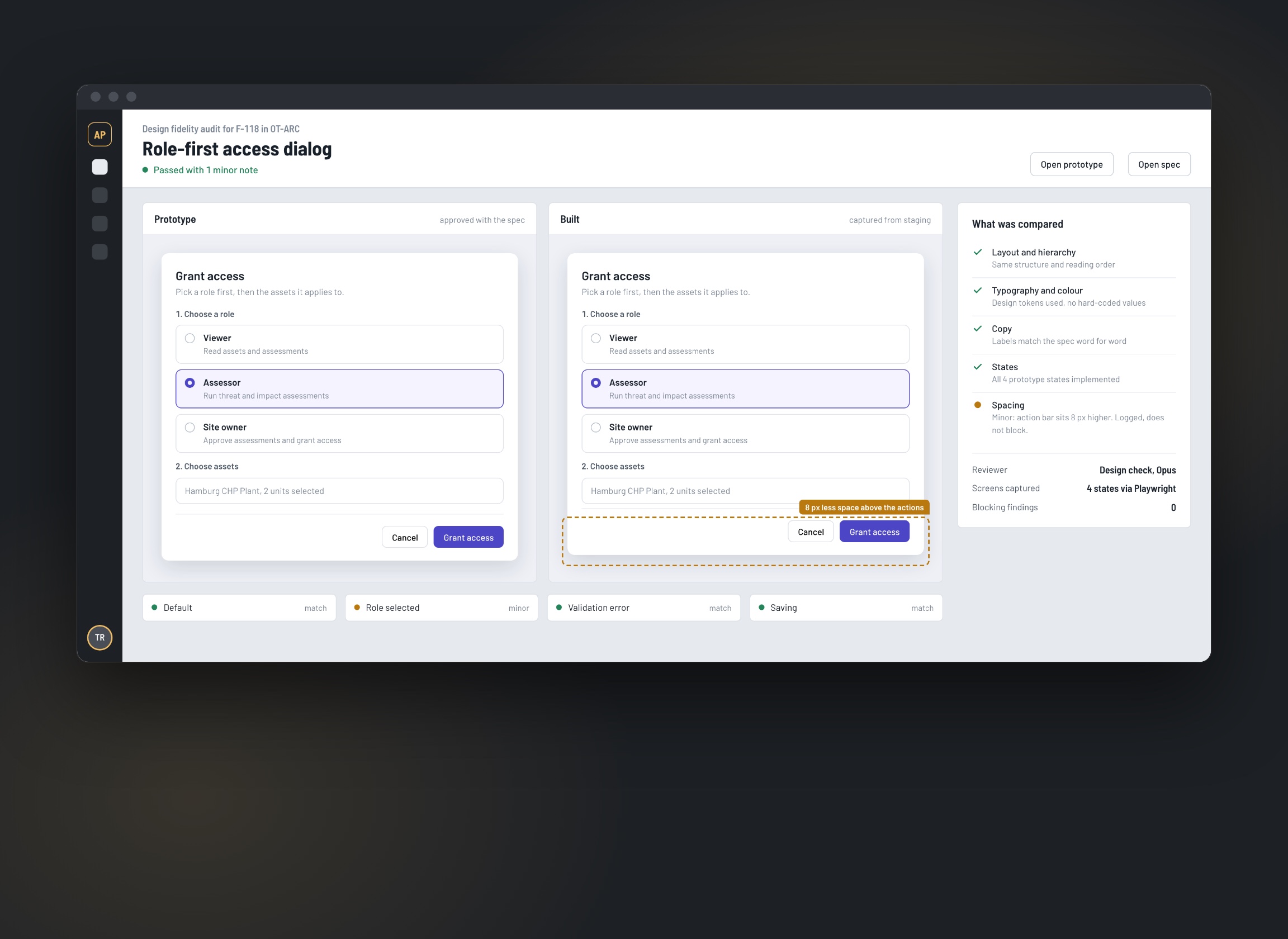
Before any code is written, Claude's frontend-design skill turns the approved spec into a UI/UX prototype of every new screen and state. Once I approve it, the prototype becomes part of the plan. After the build, a design-fidelity audit has a vision-capable model compare the implemented screens, captured with Playwright, against the prototype and the spec. Layout, copy, design tokens and states are checked, and high-severity deviations block the merge.
Many agents, one disciplined process
architecture
Many agents, one disciplined process
architecture
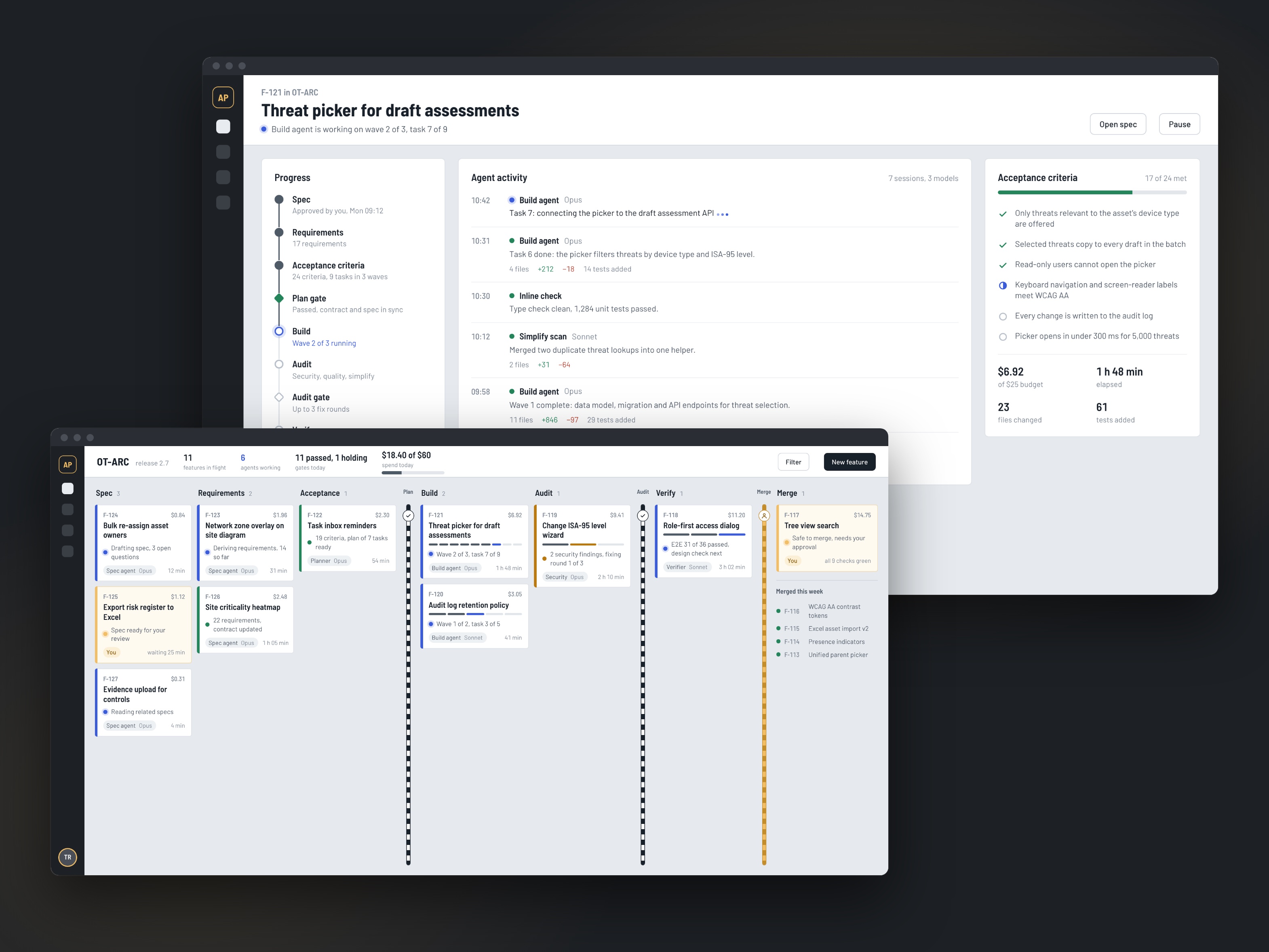
Each phase runs in its own Claude session with role-specific tool permissions. Features build in parallel in isolated git worktrees, and independent security and quality scans run bounded fix loops. A hub, workers and a desktop app track cost against per-feature and daily budgets.
Reliability is engineered, not hoped for
evals, canaries, guardrails
Reliability is engineered, not hoped for
evals, canaries, guardrails
Schema-enforced structured outputs, offline evals graded against a hand-labelled corpus, live canary projects and property-based tests keep the agents honest. More than 2,200 commits in its first seven months. The screens shown here preview the next, kanban-style interface.