Home Intro
From Technology Strategy to Shipped Code

From Technology Strategy to Shipped Code






Skills Section
Skills
Strategy, people and customers: I set technology and product direction, lead engineering teams, and make sure engineers, management and customers understand each other.
How I deliver: AI agents write the code, automated gates decide what may merge, and I own the architecture, the specs and every merge. In my current projects, 95% of all commits are AI-authored, across complete systems from database to mobile app.
My own harness turns a specification into merged code: dedicated Claude sessions for spec, build, security and quality audit, verification and design fidelity; isolated git worktrees for parallel features; gate and fix loops; cost control; offline evals and canary runs. More than 2,200 commits in its first seven months.
Specs, acceptance criteria and architecture decision records first, then AI agents implement, then automated gates decide what may merge. Built this way: an enterprise OT risk-management platform, an AI executive assistant, and the backend and mobile app of a Swiss wearable-payments product.
Project rules (CLAUDE.md), skills, hooks that guard shell commands and edits, specialised subagents, and a dedicated agent identity that opens pull requests for human approval.
Independent Claude code and security reviews as required CI checks, hardened against prompt injection; labelled-corpus evals and property-based tests for LLM output; schema-enforced structured outputs.
Contract-first OpenAPI shared by backend and app, code generated from the spec, decisions captured in ADRs; multi-tenant designs with row-level security and envelope encryption.
GitHub Actions pipelines with required checks, rulesets, rule-change gates and merge watchdogs; SHA-pinned actions, signed container images with SBOM and CVE scans; CI-only deployments with smoke tests and contract fuzzing.
Complete systems on hardened Linux: Ansible and cloud-init provisioning, Podman/Docker, systemd, nginx/Caddy with TLS, PostgreSQL with backups; Swiss and EU hosting (Exoscale, Hetzner) and Heroku.
Two decades in data security and payments at Infineon and Giesecke+Devrient: least-privilege access, no card data where it isn’t needed, GDPR-minded data flows, secret scanning and supply-chain controls.
Hands-on across Go, Python/Django, TypeScript (Node, React, Vue/Nuxt), Dart/Flutter and PostgreSQL: enough depth to own the architecture and to steer and review what the agents write.
Projects
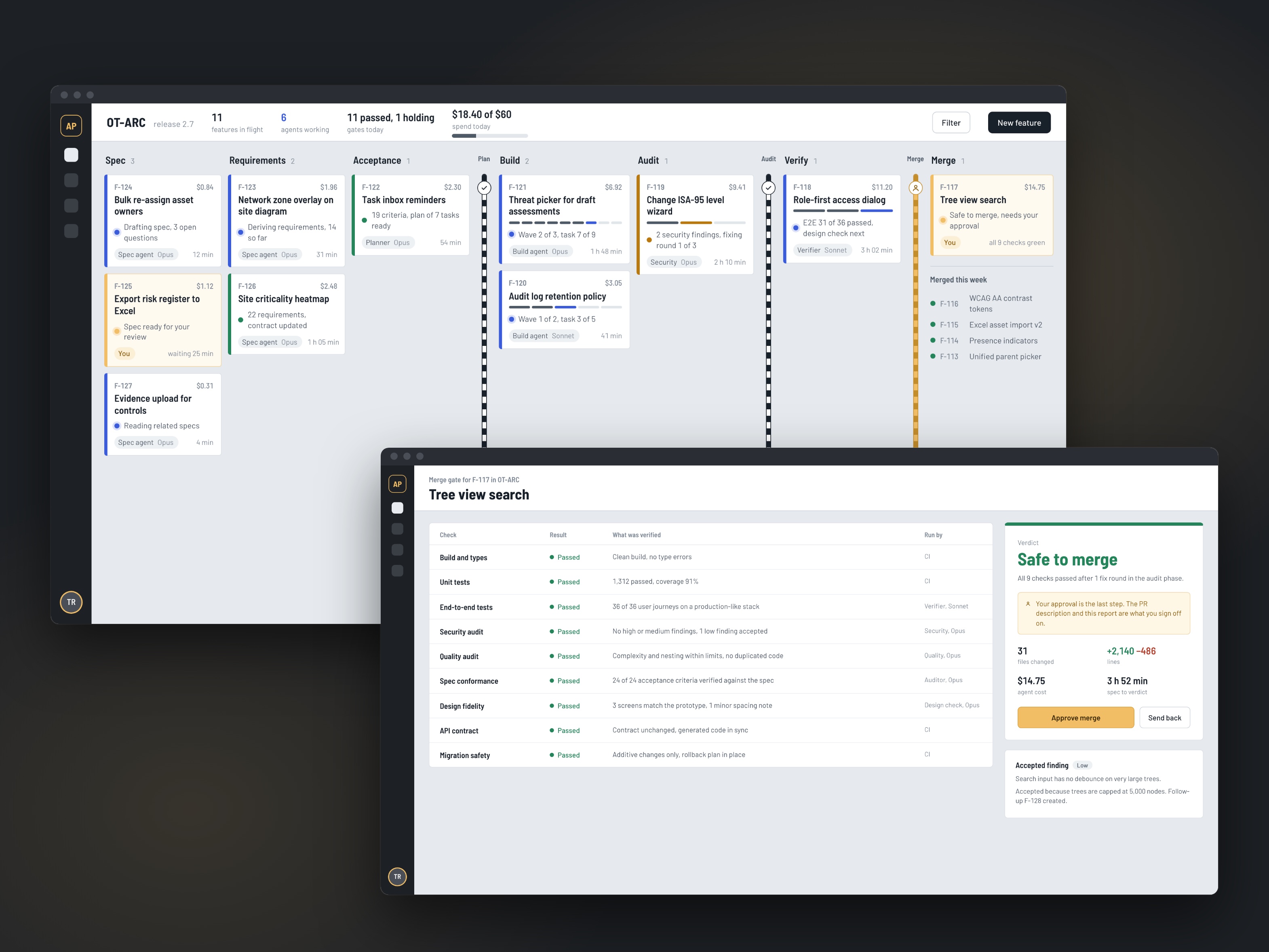
AI Product Workbench (built on Claude)
The AI Product Workbench is the harness I designed and built to turn a feature specification into reviewed, merged code. Built on Claude, it orchestrates AI agents through every phase of product engineering, from requirements to security audits and design checks, and it is how I deliver all my current projects.
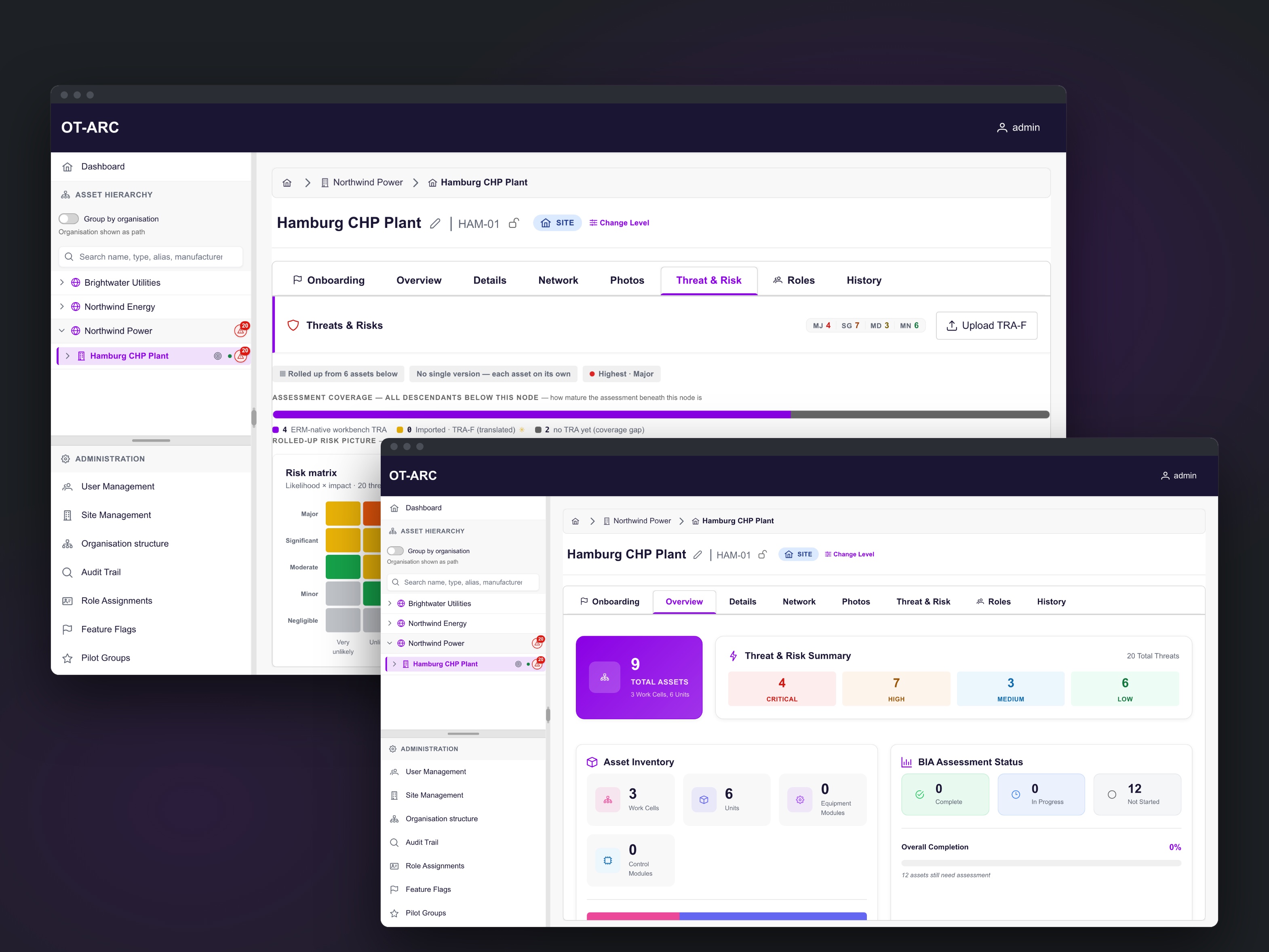
OT Cyber-Risk Platform for a Global Manufacturer
For a global industrial manufacturer, I conceived and built OT-ARC: one platform that gives security teams a complete view of the operational-technology assets across their factories and turns business-impact and threat assessments into a single risk picture. Built end to end with my own AI harness, from first spec through the pilot to the production rollout that is now starting.
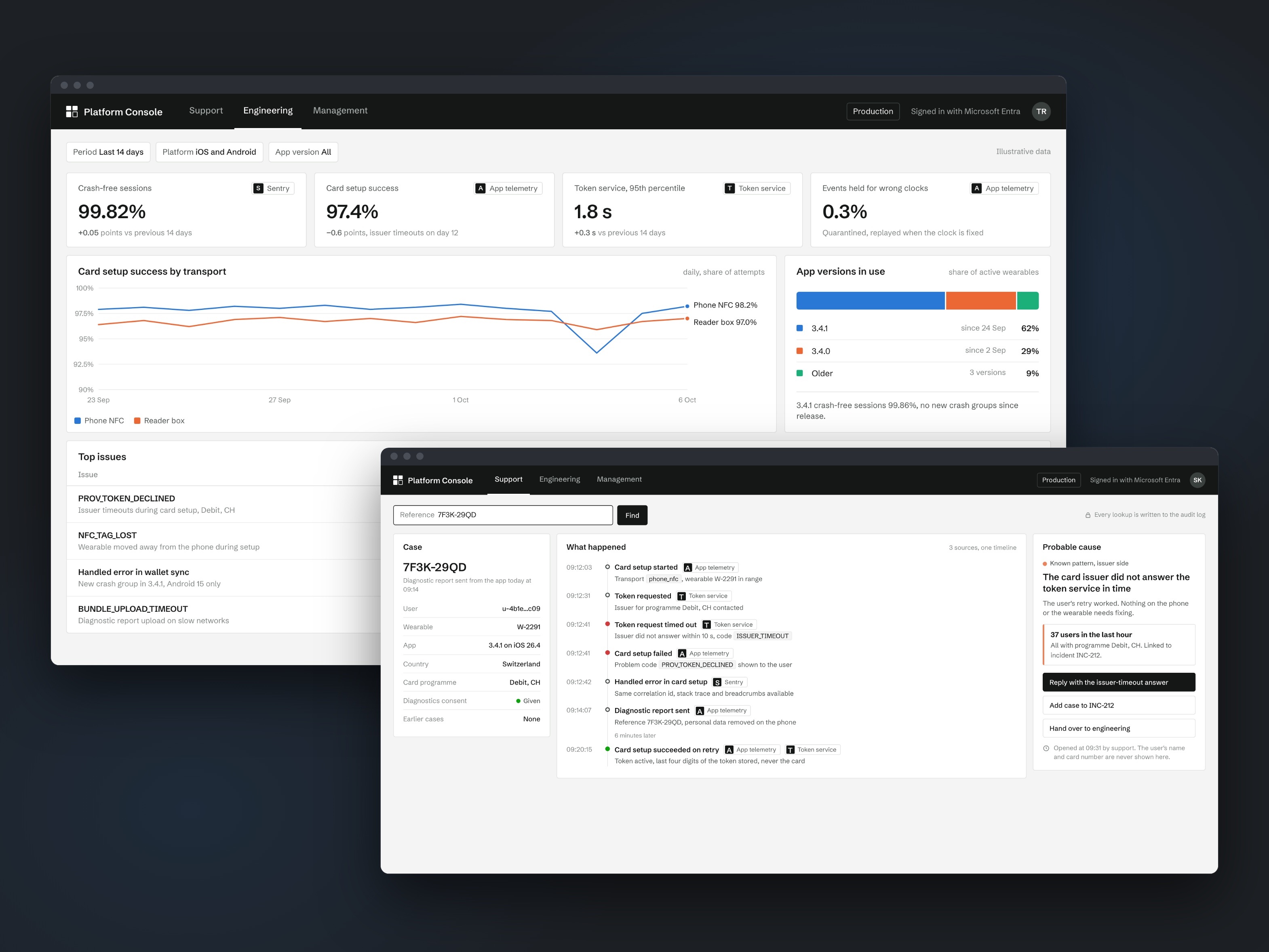
Wearable Payments: Backend & Operations Platform
For a Swiss wearable-payments company, I lead R&D on the backend behind its next stage: one platform that brings together the app's own telemetry, crash and error reports from Sentry, and the data of the tokenisation supplier, and turns them into dashboards for support, engineering and management.
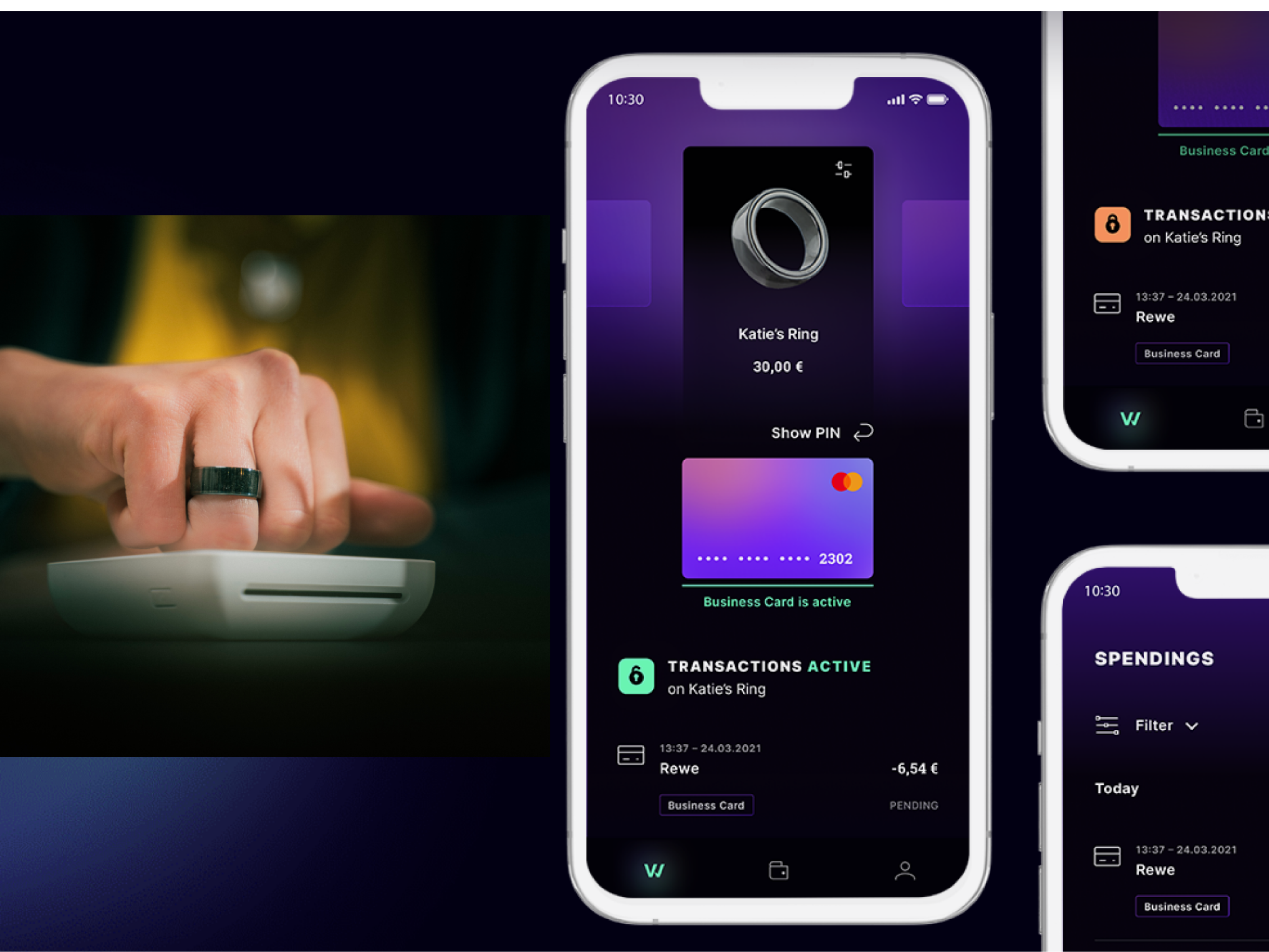
Building a FinTech Company